




A place for contemplation
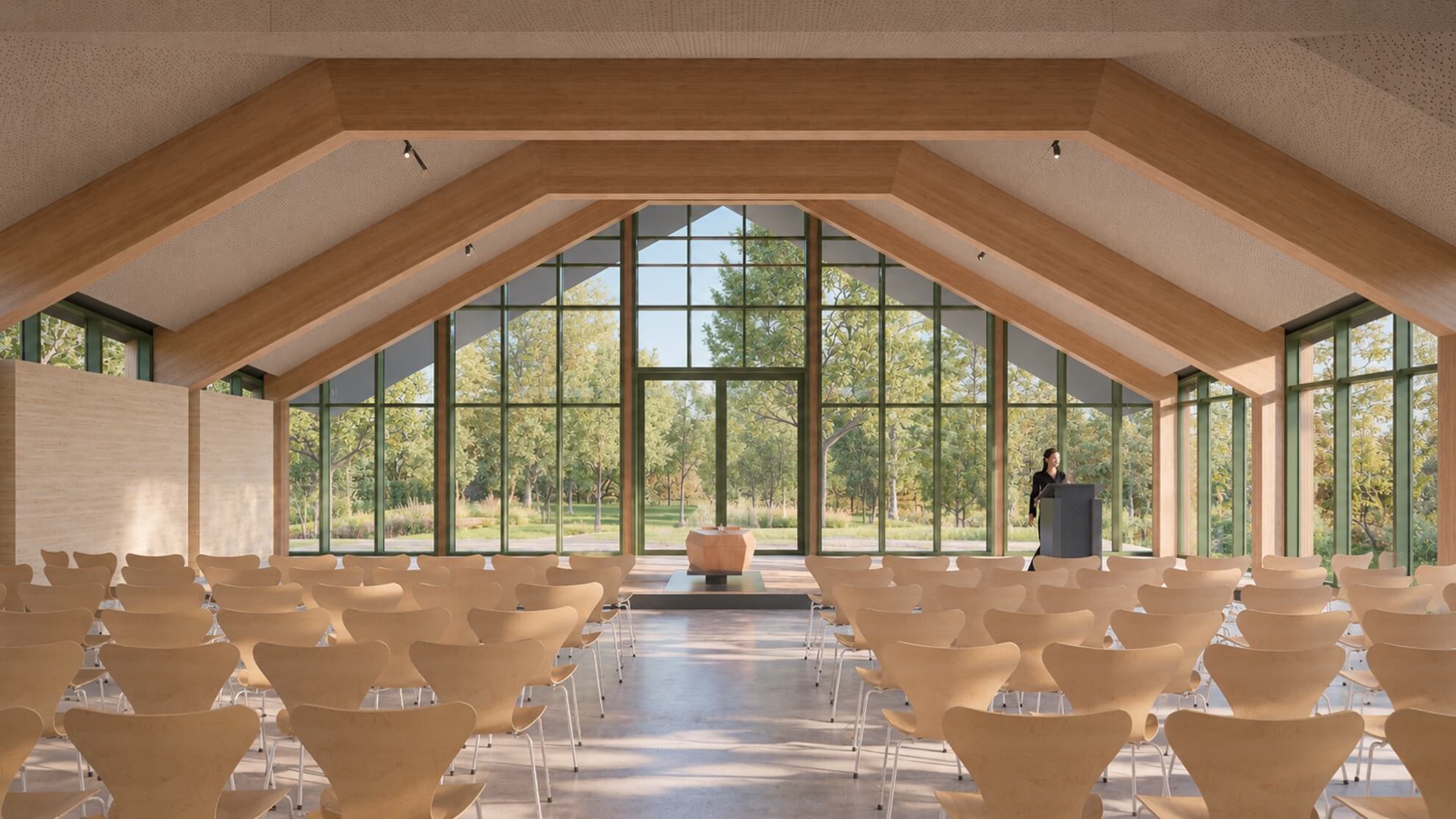
The new contemplation center, designed by NOAHH and Hulshof Architecten, is a place where people can celebrate life and take farewell of loved ones who have passed away. The building is inspired by and reflects the cycle of life. It provides space for a variety of ceremonies and gatherings, from intimate moments of personal reflection to larger assemblies in the modern auditorium for approximately 300 people. Thanks to this multifunctionality, it is a place that is both flexible and welcoming, offering dignified space for farewells, remembrance, and the celebration of life.
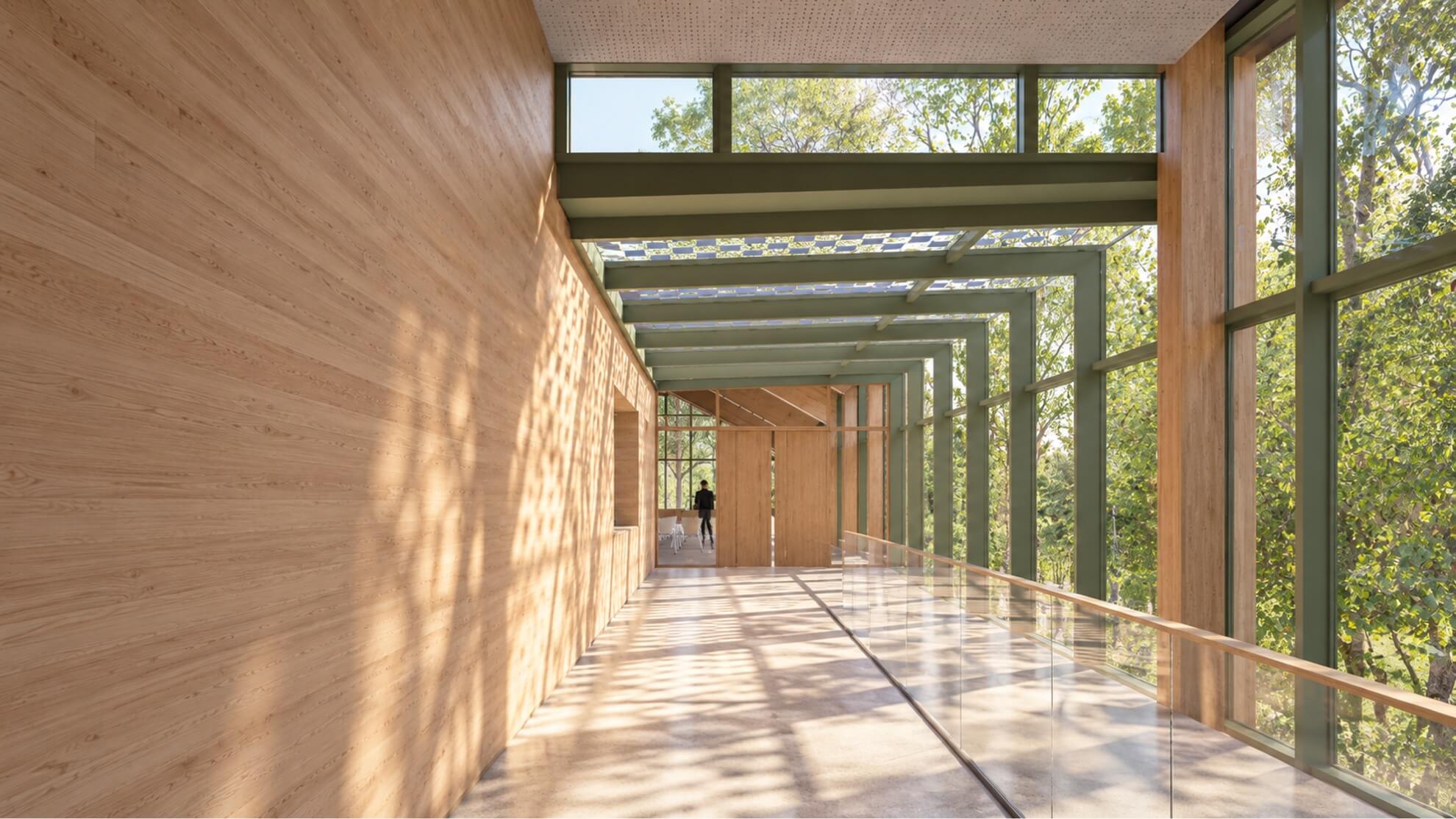
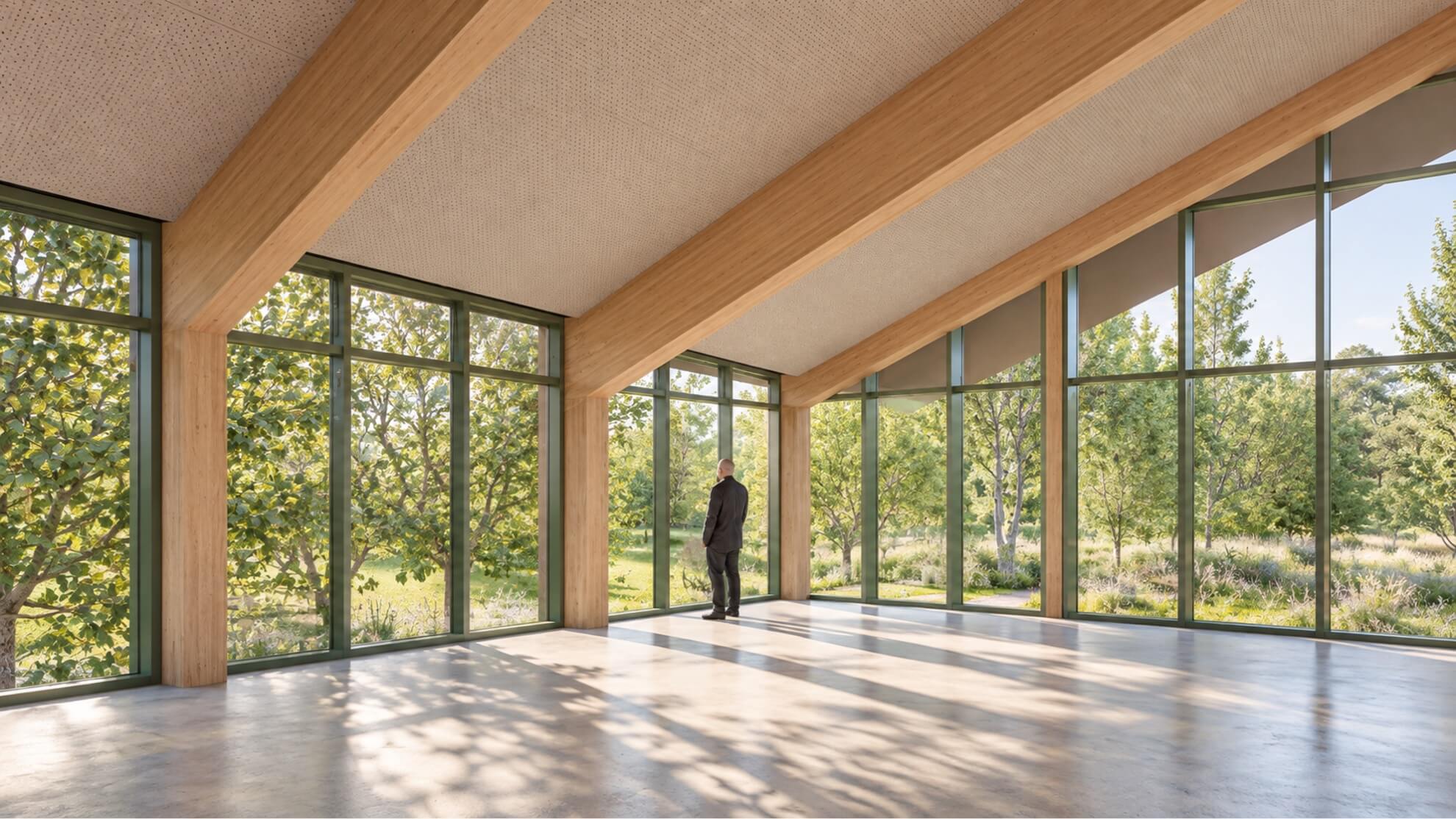
The façade and architecture are constructed from sustainable, circular, and biobased materials. Wood and bamboo provide warmth and tactility, while glass allows daylight to penetrate deeply and establishes a subtle connection with the surrounding nature. The interplay of open and closed surfaces, along with the rhythm and variation in textures, gives the façade a gentle, dynamic expression while simultaneously emphasizing calm and intimacy. The building is also fully designed to be demountable, ensuring future adaptability and enabling components to be reused.
The design establishes a strong connection with its context. It carefully aligns with the monumental Sint Barbara cemetery and respects the historical significance of the Spaarndammerdijk. At the same time, it forms a harmonious link with the surrounding peat meadow landscape, with parts of the volume placed partially below ground level and the roof shifting in triangular planes with planting and integrated solar panels. This approach allows the building to blend subtly into the landscape while remaining clearly recognizable as a contemporary architectural element.
The landscape integration, designed in collaboration with Ada Wille and the City of Amsterdam, strengthens the relationship between the building and its surroundings. New waterways, elevated walkways, and a mix of open and intimate spaces create an organic transition between the dike and the polder. This results in a rich interplay of sightlines, light, and space, where visitors feel connected both to nature and to the historical context.The contemplation center is also futureproof and sustainable. The building is completely gas-free and nearly energy-neutral (A++++), incorporating smart energy concepts such as residual heat recovery, green roofs, and solar panels integrated into the roof design. Rainwater is collected and reused in a specially designed retention pond next to the auditorium, reinforcing the circular relationship with the landscape and the natural water system.
Een plek om te bezinnen
Het nieuwe bezinningscentrum, ontworpen door NOAHH en Hulshof Architecten, is een plek waar mensen het leven kunnen vieren én tot rust kunnen komen. Het gebouw is geïnspireerd op het weerspiegelt de cyclus van leven, herinnering en bezinning. Het biedt ruimte voor uiteenlopende ceremonies en ontmoetingen, van intieme momenten van persoonlijke reflectie tot grotere samenkomsten in de moderne aula voor circa 300 personen. Dankzij deze multifunctionaliteit ontstaat een plek die zowel flexibel als gastvrij is en die op een waardige manier ruimte biedt aan diverse vormen van afscheid, herdenking en viering van het leven.
De gevel en architectuur zijn opgebouwd uit duurzame, circulaire en biobased materialen. Hout en bamboe zorgen voor warmte en tactiliteit, glas laat daglicht diep binnenvallen en legt een subtiele verbinding met de omliggende natuur. Het spel van open en gesloten vlakken, het ritme en de variatie in texturen geven de gevel een zachte, dynamische uitstraling en benadrukken tegelijkertijd rust en geborgenheid. Het gebouw is bovendien volledig losmaakbaar ontworpen, waardoor het toekomstbestendig blijft en onderdelen hergebruikt kunnen worden.
Het ontwerp legt een sterke verbinding met zijn context. Het sluit zorgvuldig aan bij de monumentale begraafplaats Sint Barbara en respecteert de historische waarde van de Spaarndammerdijk. Tegelijkertijd vormt het een harmonieuze schakel met het omliggende veenweidegebied, waarbij het volume deels onder maaiveld is geplaatst en het dak in driehoekige vlakken verspringt met beplanting en geïntegreerde zonnepanelen. Hierdoor voegt het gebouw zich subtiel in het landschap, terwijl het toch duidelijk herkenbaar blijft als nieuw architectonisch element.
De landschappelijke inpassing, ontworpen in samenwerking met Ada Wille en de Gemeente Amsterdam, versterkt de relatie tussen gebouw en omgeving. Nieuwe watergangen, verhoogde loopbruggen en een afwisseling van open en intieme plekken creëren een organische overgang tussen de dijk en de polder. Zo ontstaat een rijk samenspel van zichtlijnen, licht en ruimte, waarin bezoekers zowel verbonden zijn met de natuur als met de historische context.
Het bezinningscentrum is bovendien toekomstgericht en duurzaam. Het gebouw is volledig gasloos en bijna energieneutraal (A++++), met slimme energieconcepten zoals restwarmte-terugwinning, groene daken en zonnepanelen geïntegreerd in het dakontwerp. Regenwater wordt opgevangen en hergebruikt in een speciaal aangelegde retentievijver naast de aula, waarmee de circulaire relatie met het landschap en de natuurlijke waterhuishouding wordt versterkt.
CREDITS
GFA
1584 m2
Client:
Stichting Begraafplaats St. Barbara
Collaboration
NOAHH | Network Oriented Architecture with Hulshof Architects
Team
Loes Thijssen, Ineke Hulshof, Geert Mol, Kay Bos, Stef Hartman, Ibon Bascones, Edin Buitenhuis, Biao Chen, Dominique van Kooi
Photo’s and Images:
NOAHH
2024 - 2027